The short answer
Direct answer
South African commercial-kitchen suppliers should start by identifying a real buying event—such as a facility expansion, equipment replacement or production increase—then validate the customer, capacity problem, decision-maker, procurement route and delivered economics. Namibia already has local suppliers and service providers, so any potential gap must be verified. A buying event is a research hypothesis, not proof of a live project or demand.
The field guide
A practical sequence for assessing the question in front of you.
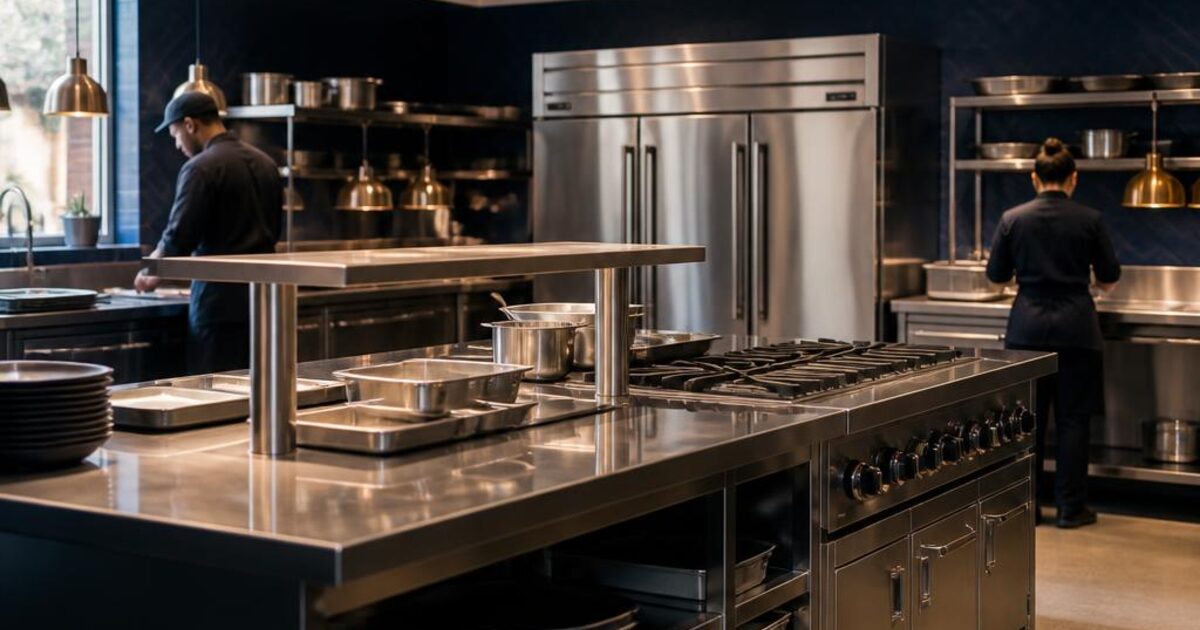
Namibia doesn’t need another equipment catalogue. It needs working kitchens.
For Gauteng commercial-kitchen manufacturers, designers, installers, refrigeration specialists, stainless-steel fabricators, catering-equipment companies and food-processing technology businesses, the first question is not “What equipment can we export?” It is “Which Namibian commercial kitchens have an expensive operational problem that our company already knows how to solve?”
A kitchen is a working operation, not a list of appliances. Capacity, workflow, refrigeration, uptime, food safety, energy use, maintenance and parts availability can matter as much as the initial equipment specification. The commercial opportunity—if one exists—may be a defined upgrade, installation, service arrangement or project rather than a catalogue sale.
The line “Namibia doesn’t need another equipment catalogue. It needs working kitchens” is a campaign thesis, not a claim that every Namibian kitchen is deficient. It sets a useful test: can your capability improve an identified customer’s operation in a way that can be specified, delivered and paid for?
What creates a commercial-kitchen equipment buying event in Namibia?
Start with the buying event, not a catalogue. A hotel adding rooms, a lodge expanding guest capacity, a mine changing workforce-catering capacity, a hospital upgrading catering facilities, a restaurant increasing throughput, a food processor expanding production, a new property development or an institution replacing equipment may have a new requirement to investigate.
These are possible triggers, not evidence that a named organisation is buying. Verify the facility change, timing, operational constraint, owner of the requirement, procurement route, budget or approval stage and equipment specification directly before treating it as an opportunity.
- New facility, hospitality property or commercial development.
- Expansion of rooms, production, workforce or food-service throughput.
- Equipment replacement, reliability concern, operating-cost problem or capacity constraint.
- New contract, project, mine or service obligation that changes catering or production requirements.
Where a specific operational problem may sit
Potential settings to investigate include hotels, lodges, hospitality groups and resorts; private healthcare facilities; mining accommodation and remote-site catering; restaurants, cafés, catering businesses and central kitchens; schools, universities and other institutional facilities; food processors, bakeries and butcheries; retail food businesses; and property developments.
These are customer hypotheses, not evidence of projects or procurement. A facility category does not tell you whether it is planning a purchase, who controls the specification, what procurement route applies or whether a Gauteng supplier is eligible. Start with the actual organisation and a verifiable buying trigger.
Relevant commercial centres to research include Windhoek, Walvis Bay, Swakopmund, Ongwediva, Oshakati, Otjiwarongo, Tsumeb and Rundu. Geography alone is not a demand signal; verify the target account, project and service radius.
- A hotel or lodge where kitchen downtime may disrupt service.
- A healthcare, institutional or workforce-feeding operation with a defined capacity or workflow requirement.
- A food producer considering an upgrade from manual processes to a specified production step.
- A restaurant or central kitchen assessing a targeted replacement, refrigeration or extraction project.
- An operator that needs dependable commissioning, maintenance, repairs or spare-parts support.
The market is not empty—and that matters
Namibia has local commercial-kitchen suppliers and service providers. For example, MacNam Caterbake publicly describes equipment supply, maintenance and repair services in Namibia. That is one visible competitor signal, not a complete competitor census; map additional suppliers, installers, refrigeration specialists and service coverage for the product and location you intend to serve.
Existing provision raises the quality of the question. Where is a specific commercial problem underserved, and what evidence shows that a customer would consider a different solution? Potential differentiation could involve specialist engineering, a particular equipment capability, project capacity, installation quality, lifecycle economics, energy performance, automation or a credible after-sales arrangement. Each is a proposition to test, not a proven Namibia market gap.
Johannesburg manufacturers: show the advantage, then prove the fit
South African suppliers may bring manufacturing depth, equipment availability, technical expertise, established supply chains, custom fabrication, hospitality experience or after-sales capability. These are capabilities to substantiate for the product and project—not automatic advantages in Namibia.
The Johannesburg–Windhoek corridor can support practical research and delivery planning. Gauteng manufacturing and commercial areas such as Johannesburg, Sandton, Midrand, Centurion, Pretoria, Ekurhuleni, Boksburg, Germiston, Kempton Park, Isando, Spartan, Jet Park and Wadeville may be relevant to a supplier's own capability map; they do not imply BusinessNamza has offices there.
The wrong sequence: catalogue, distributor search, office, overhead, hope
Starting with a catalogue and an unqualified distributor search can create activity without establishing a customer problem. If the offer, buyer, service expectations, project scope and economics are still unclear, a distributor cannot reliably validate every assumption for you.
Adding an office, stock, staff or local service commitments before confirming a credible first project can increase exposure before the commercial case is known. This sequence is not always wrong—an established buyer or tender may justify a different route—but the commitment should follow evidence and be proportionate to it.
- Catalogue → broad distributor search → premises or stock → fixed overhead → hope.
- The failure mode: activity is mistaken for buyer evidence, while delivery and service obligations remain uncosted.
The BusinessNamza sequence: problem to footprint
A more disciplined route moves from an operational problem to a justified local footprint. The stages can overlap, but each should leave a clear record of what is known, what remains assumed and what decision follows.
| Stage | Commercial question | Evidence to seek |
|---|---|---|
| Problem | What costly or material operational issue needs solving? | A specific workflow, failure, capacity constraint or project requirement. |
| Customer | Which organisation experiences it, and who decides? | Named account, decision roles, procurement route and buying trigger. |
| Project | What can be scoped and bought? | A defined pilot, supply requirement, replacement, upgrade or installation. |
| Economics | Can the offer work when delivered? | Price, landed costs, margin, logistics, installation, support and alternatives. |
| First transaction | What is the shortest credible route to revenue? | A buyer-confirmed next step, commercial process and delivery responsibilities. |
| Footprint | What local capability is actually required? | Evidence for a distributor, technical partner, representation, staff, stock or premises. |
What a Namibia Commercial Validation Sprint should establish
BusinessNamza’s Namibia Commercial Validation Sprint is the first service in the commercial progression. For a commercial-kitchen business, the work should help clarify target customer segments, real operational problems, decision-makers, current alternatives, competitive conditions, route to market, buyer interest, project possibilities, commercial economics, first-transaction paths and any local-footprint requirements.
A useful output is better commercial evidence and a decision: proceed, adapt the offer, investigate further or pause. It is not a promise of sales, a guaranteed contract, buyer access or manufactured demand. Current tender opportunities may be relevant leads, but their live status, eligibility, deadlines and specifications must be checked directly on the responsible procurement source.
How the 30-day Commercial Validation Sprint can structure the test
Week 1 — Problem and market mapping: identify customer clusters, buying-event hypotheses and operational problems to verify.
Week 2 — Decision-maker access: map relevant owners, executives, operations leaders and procurement roles, then make suitable approaches where fit and availability allow. Access and meetings are not guaranteed.
Week 3 — Commercial validation: test the problem, urgency, current solution, budget logic, buying behaviour, procurement route and commercial fit.
Week 4 — Opportunity conversion: agree a defined next step where evidence supports it, such as discovery, technical discussion, quotation, site assessment, pilot or a focused meeting. No transaction or customer outcome is promised.
From a project to a first transaction
Before quoting, define the equipment or service scope, site conditions, technical specifications, responsibilities for import and clearance, delivery, installation, commissioning, training, warranty, maintenance and parts. Clarify the buyer’s purchasing process, funding or approval status and decision timeline rather than treating a conversation as a purchase signal.
Build economics with current, project-specific inputs: product and packaging, freight, insurance, applicable import treatment, clearance, local transport, installation, travel, local subcontracting, warranty exposure, parts, channel margin and ongoing support. The Namibia Trade Information Portal provides trade procedures and guidance; confirm the exact classification and current requirements with qualified customs and tax professionals before committing.
A South African track record can help explain capability, but it does not establish Namibia-specific demand, eligibility, service capacity or procurement success. Use it as evidence of what your company can do—not proof that a particular Namibian buyer needs it.
A measured progression, not an automatic expansion ladder
The commercial sequence is VALIDATION SPRINT → HOSTED EXECUTIVE BUSINESS VISIT → MARKET LAUNCH → LOCAL REPRESENTATION RETAINER. Progress only when evidence, availability and agreed scope support the next stage.
If the evidence supports continued work, the next step may be a Hosted Executive Business Visit scoped around a defined question and proposed conversations. Meetings and access depend on availability and confirmation. A visit does not guarantee buyer interest or a transaction.
Market Launch planning follows only when the commercial case and delivery route justify it. Local representation, a technical partner, warehouse, service capability, staff or office should be considered only when the work and economics demonstrate a need for that footprint.
Who should consider this approach?
This buying-event approach can help commercial-kitchen manufacturers, food-service and industrial-kitchen suppliers, refrigeration and cold-room companies, food-processing and bakery-equipment manufacturers, catering and restaurant-equipment suppliers, commercial-laundry suppliers, packaging-equipment businesses, industrial-heating manufacturers and stainless-steel fabricators.
The common test is not the product category. It is whether a specific Namibian organisation has a verified problem that the supplier can solve, deliver and support at acceptable economics.
Local representation in Namibia
An agreed local representation scope can include ongoing opportunity development, customer and stakeholder relationship management, introductions, meeting coordination and appropriate physical meeting attendance, commercial and proposal follow-up, market intelligence, coordination with customer or technical teams, and maintaining agreed momentum between executive visits.
The client and BusinessNamza should agree responsibilities, authority, cadence and fees in writing. This service does not guarantee introductions, meetings, customers, contracts or sales.
Validate the project before you expand
If you're designing, manufacturing, installing or supporting commercial kitchens in Gauteng, your next significant project may not necessarily be in Johannesburg. But before you assume it is in Namibia, validate it. Don't export the product. Export the solution to a problem Namibia already has.
Questions to settle
Frequently asked
Is Namibia a good market for commercial kitchen equipment?
Namibia has hospitality, healthcare, mining, food-service and institutional operations that use commercial kitchen infrastructure, and it has local suppliers and service providers. That context does not prove demand for a new supplier. Validate a specific customer, operational problem, buying process, differentiated solution and delivered economics.
How can a South African company enter the Namibia market?
Define a specific customer problem and buying trigger, identify the decision-maker and procurement route, verify alternatives and delivery requirements, and test the commercial economics before choosing a distributor, direct route or local footprint.
How do I find commercial-kitchen equipment buyers in Namibia?
Start with facility changes and operational buying events, then verify named organisations, the problem owner, specification roles, procurement process and timing. Industry categories and public directories are research leads, not proof of demand.
How can Johannesburg manufacturers sell into Namibia?
Map the capability and service model you can actually deliver, identify a specific Namibian buying event, validate the customer and decision path, and cost delivery, installation, warranty and support before quoting.
Do I need a Namibia office before selling there?
Not necessarily. A company can investigate and validate a commercial opportunity before deciding whether a permanent office is justified. Legal, tax, customs, employment and licensing obligations depend on the activity and should be checked with qualified advisers.
How do I find distributors in Namibia?
Define the distributor's required sales, stock, installation or service role, then shortlist candidates using verifiable sources and assess customer access, capacity, references and reporting. Validate customer demand separately before granting exclusivity.
What is commercial market validation?
Commercial market validation tests whether a defined customer has a specific problem, a credible buying process and a viable delivery and commercial case. It helps a business decide to proceed, adapt, investigate further or pause.
How can a South African manufacturer test demand in Namibia?
Select a defined use case, verify the buying trigger and decision roles, compare existing alternatives, test procurement and service requirements, and model delivered economics using current project inputs.
Can BusinessNamza represent a South African company in Namibia?
BusinessNamza is based in Windhoek and can provide agreed commercial liaison, introductions, meeting attendance, local follow-up and opportunity-development support. Scope and authority are agreed per engagement; customers, meetings and sales are not guaranteed.
Which industries may use commercial kitchen equipment in Namibia?
Potential settings to research include hospitality, healthcare, mining and workforce catering, education and institutions, restaurants, catering companies, food processing and retail food businesses. These categories do not establish that a specific buyer has a current requirement.
How can equipment suppliers find hotel and lodge opportunities in Namibia?
Look for verifiable development, refurbishment, room-expansion or operating-capacity events, then confirm the equipment need, owner, specification, funding or approval status, procurement route and timing with the relevant organisation.
How can manufacturers find mining procurement opportunities in Namibia?
Monitor official procurement sources and verify each notice with its issuing organisation. Check eligibility, closing date, technical specifications, site requirements and procurement status; a tender listing is not a guaranteed opportunity.
What is the best way to validate a Namibia market opportunity?
Verify the customer, operational problem, buying event, decision-maker, current alternative, procurement path, delivery responsibilities and economics. Do not treat general sector interest as buyer evidence.
How does local representation in Namibia work?
A written scope may cover agreed stakeholder liaison, introductions, appropriate meeting attendance, follow-up, market intelligence and coordination between executive visits. Responsibilities, cadence and fees require agreement; representation does not guarantee demand or sales.
What is a Hosted Executive Business Visit?
It is a focused, prepared in-person visit built around agreed commercial questions and proposed meetings or site context. The schedule depends on fit and third-party availability and does not guarantee customer access or a transaction.
Reference desk
Sources & verification
Source links are provided for checking the underlying guidance. This article was last verified on .
- S01Namibia Trade Information PortalChecked
Namibia Ministry of Industrialisation and Trade
- S02eProcurement PortalChecked
Government of Namibia
- S03MacNam Caterbake: Commercial Kitchen Equipment and ServicesChecked
MacNam Caterbake